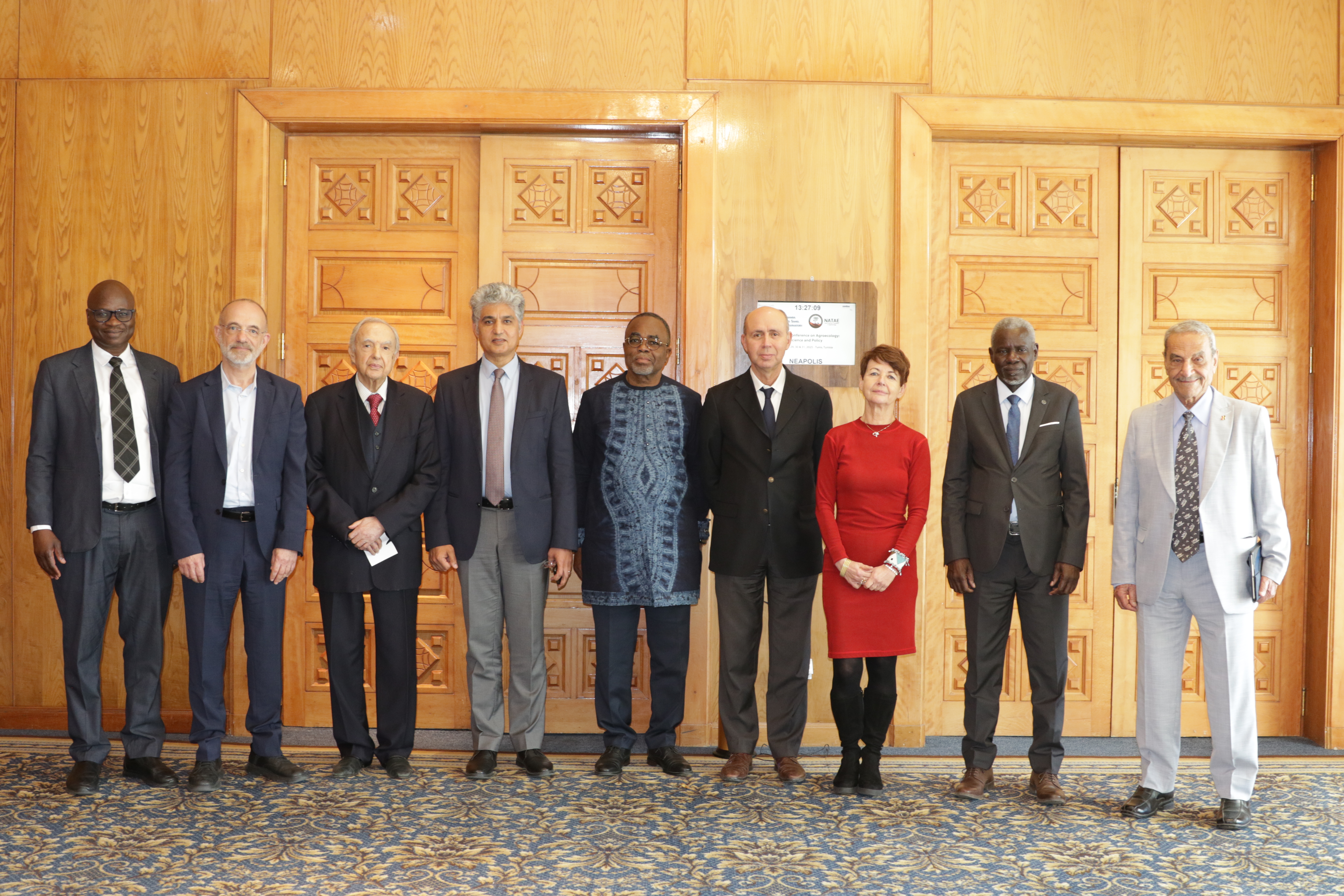
27th Session of the OSS Strategic Orientation Committee, Tunis, January 28, 2025
Held on January 28, 2025 in Tunis, the 27th session of the Strategic Orientation…
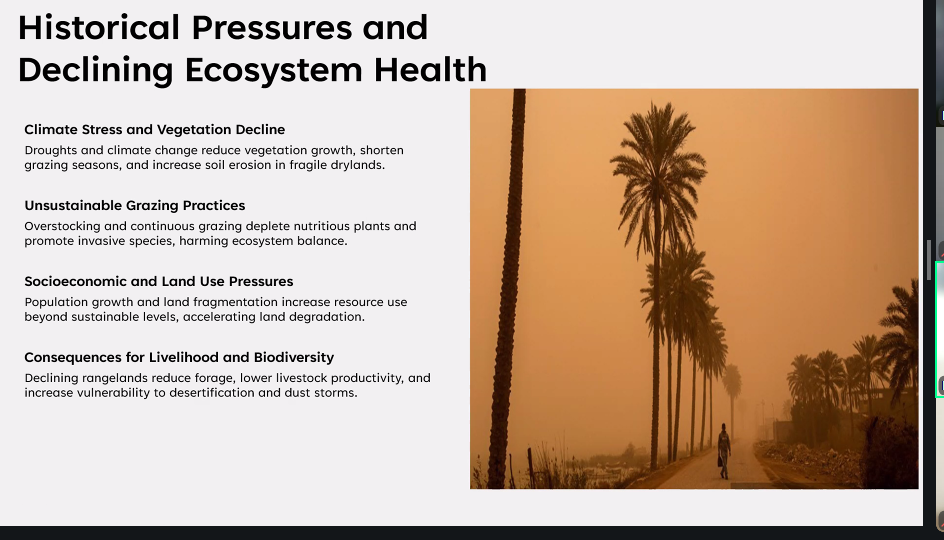
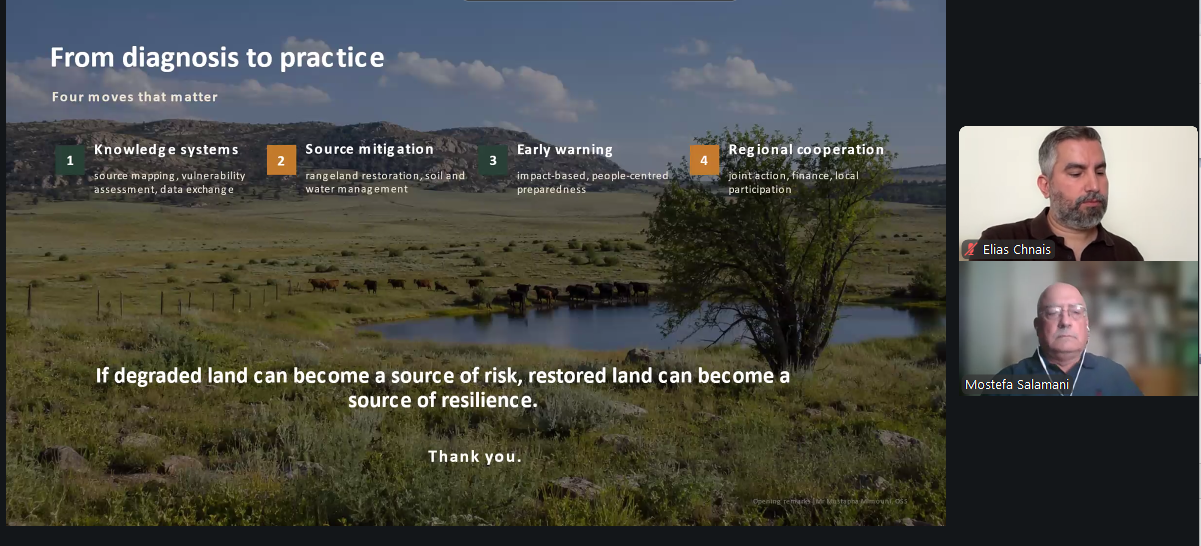
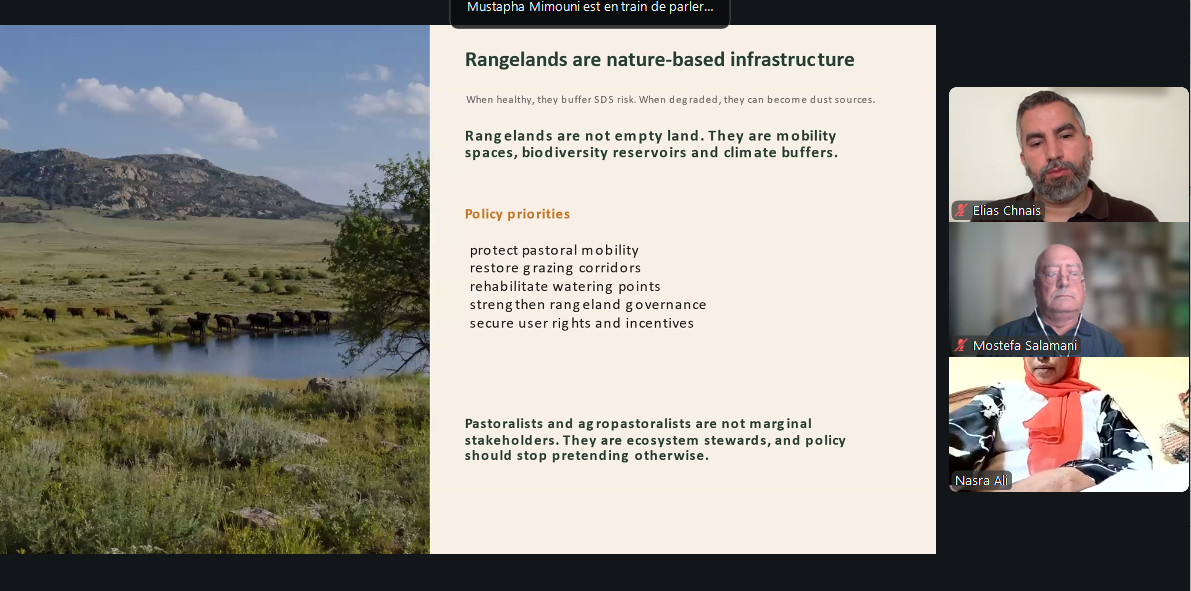
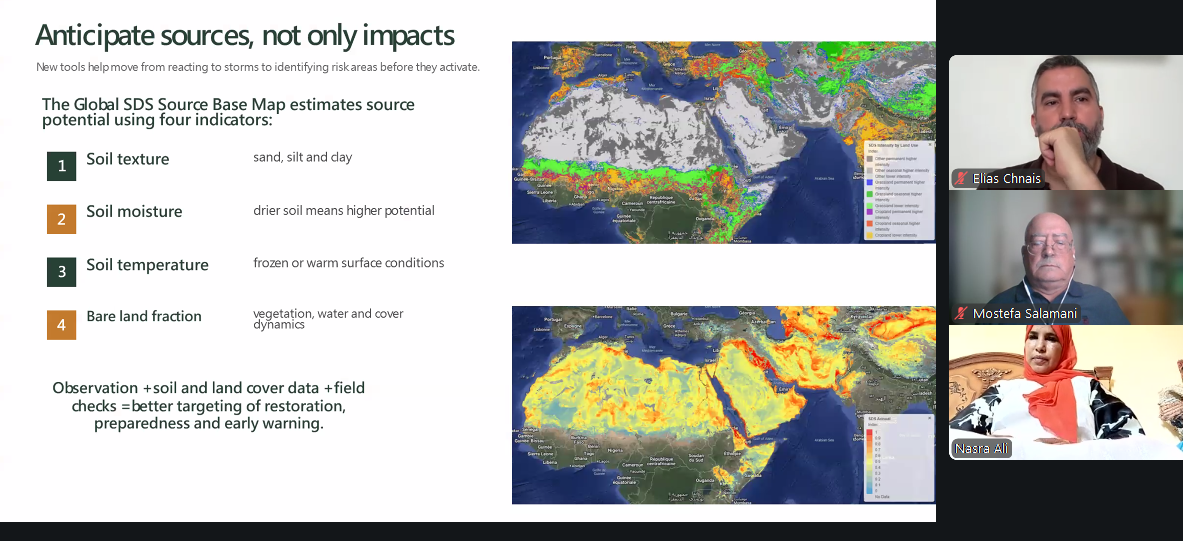
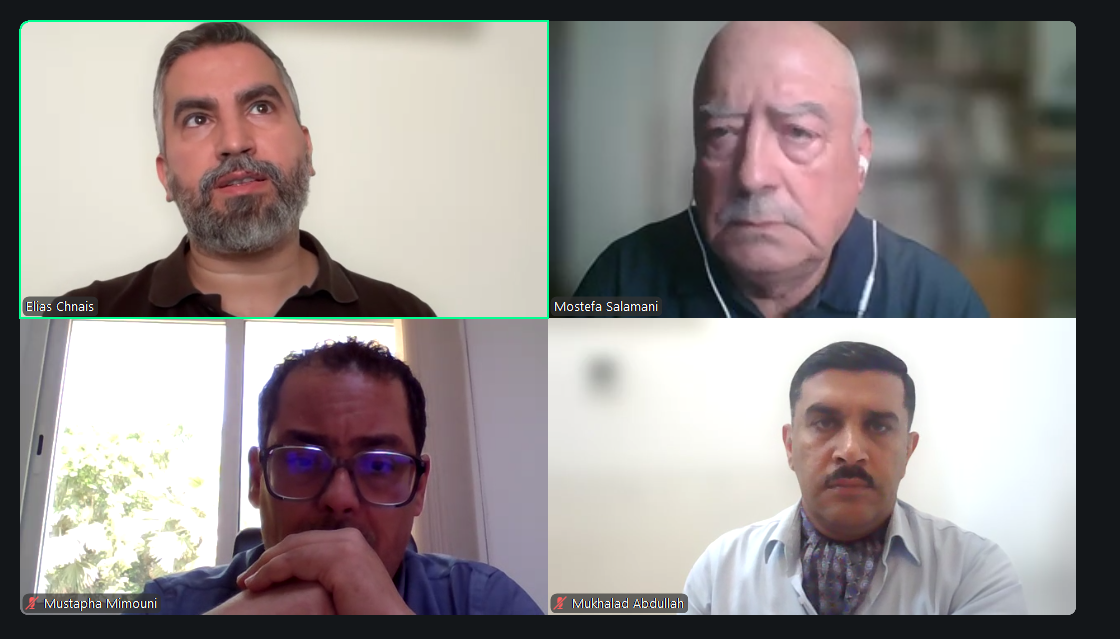
Webinar, 13 July 2026.
Proclaimed by the United Nations, the International Year of Rangelands and Pastoralists (IYRP 2026) highlights the vital role of pastoralism in the sustainable management of drylands. In line with its mandate and the objectives of the Rio Conventions, the Sahara and Sahel Observatory continues its commitment to restoring arid ecosystems across North Africa and the Middle East, addressing the growing challenges posed by climate change.
In this context, the regional webinar "Nature-Based Solutions to Combat Sand and Dust Storms," organized on 13 July 2026 by the NENA Consortium, underscored the importance of tailoring Nature-based Solutions (NbS) to the specific realities of each territory. Bringing together the Food and Agriculture Organization of the United Nations (FAO), the OSS, the International Center for Agricultural Research in the Dry Areas (ICARDA), and the National Center for Meteorology of Saudi Arabia, the event drew on case studies from Algeria, Egypt, and Iraq. Discussions highlighted that effective responses depend not on replicating a single model, but on adapting solutions to local ecological, socio-economic, and institutional contexts.
On this occasion, the OSS emphasized the strategic role of scientific observation in managing sand and dust storms. Mr. Mustapha Mimouni, Director of the Technology, Information and Remote Sensing Department, explained that identifying source areas, monitoring transport pathways, prioritizing intervention zones, and assessing impacts are all interconnected steps within a single decision-making process. Scientific data thus becomes a powerful decision-support tool, enabling a better understanding of the phenomenon, more targeted interventions, and more effective investment planning.
As UNCCD COP17 approaches, discussions highlighted a key challenge: moving beyond risk assessment to fully integrating sand and dust storm management into public policies. The 2025–2034 Decade on Combating Sand and Dust Storms will only deliver tangible results if commitments are translated into planned, financed, monitored, and sustained actions that extend beyond individual project cycles.
Nature-based Solutions provide an effective response to land degradation by restoring vegetation cover while promoting more sustainable human practices that reduce territorial vulnerability. This webinar offered a compelling example from the Middle East and North Africa, demonstrating that context-specific solutions can succeed when knowledge sharing, experience exchange, and the dissemination of good practices are actively encouraged.
The International Year is ultimately a call to action. Governments, civil society, the private sector, and local communities are encouraged to seize this opportunity to increase responsible investment, strengthen partnerships, and address the growing challenges faced by pastoralists and farmers, thereby reducing the vulnerability of territories across the Sahara and the Sahel.
Held on January 28, 2025 in Tunis, the 27th session of the Strategic Orientation…
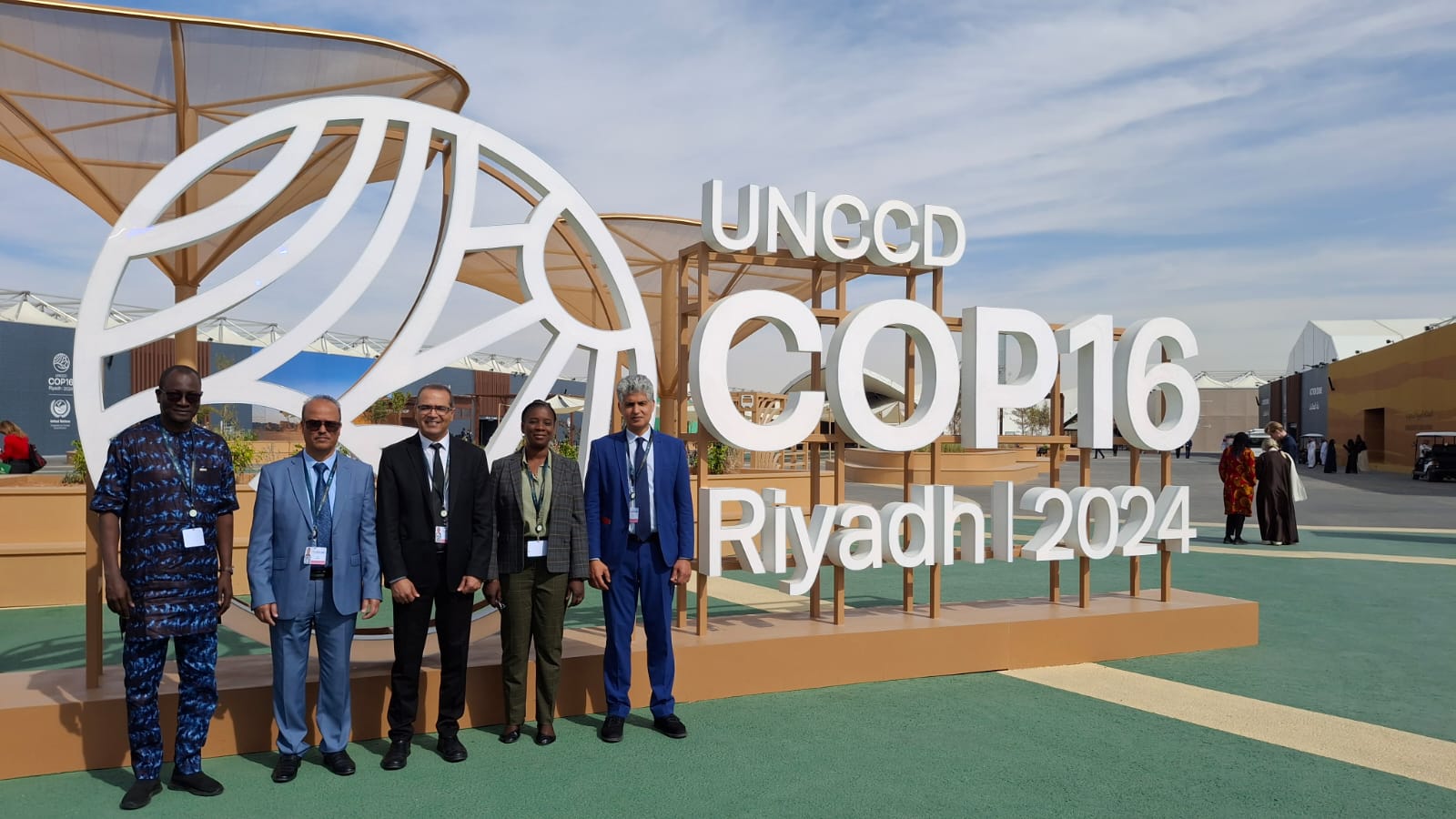
The participation of the Sahara and Sahel…
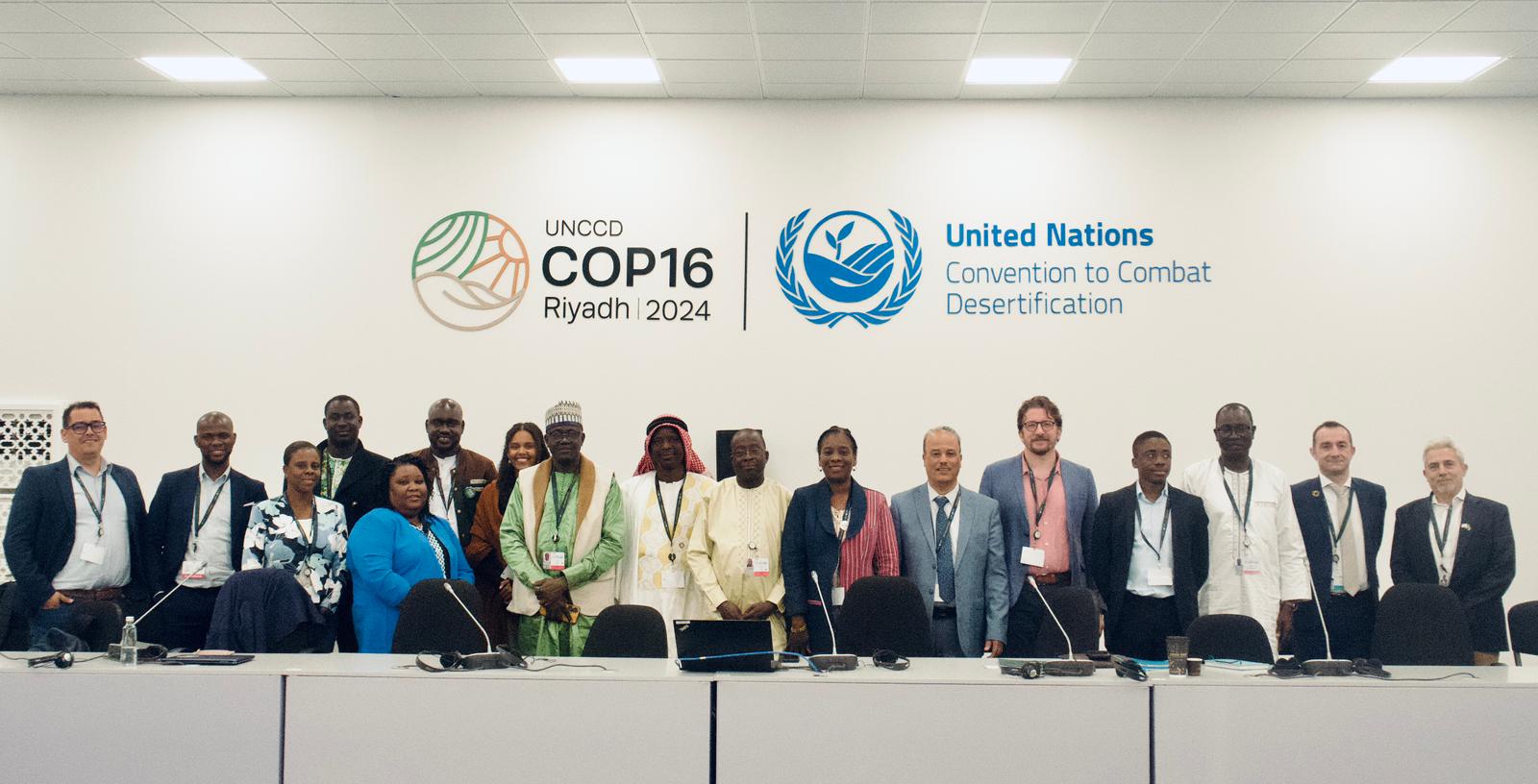
OSS Side Event at COP16: Strengthening Resilience in the Sahel through Multi-…