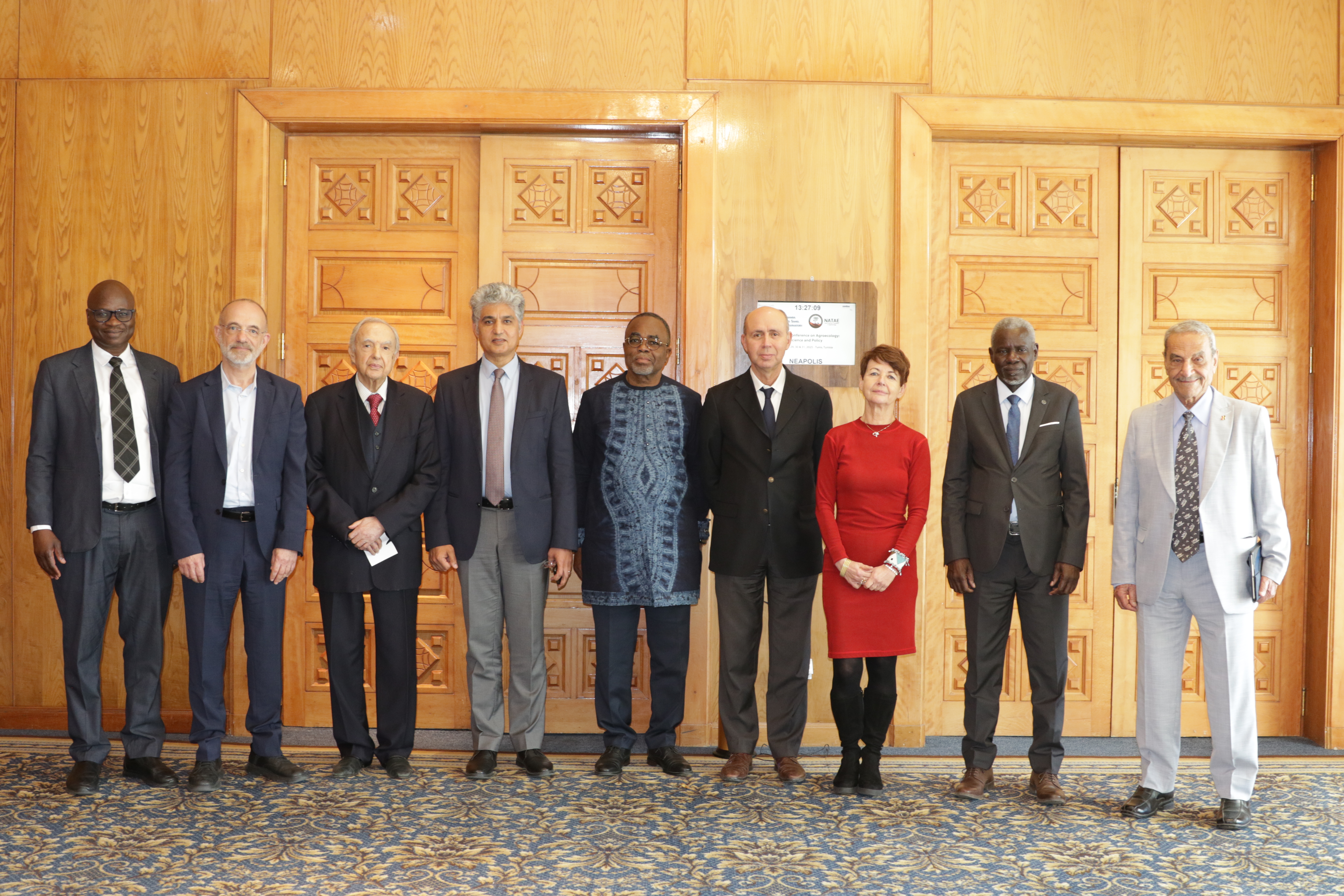
27th Session of the OSS Strategic Orientation Committee, Tunis, January 28, 2025
Held on January 28, 2025 in Tunis, the 27th session of the Strategic Orientation…
March 5, 2026
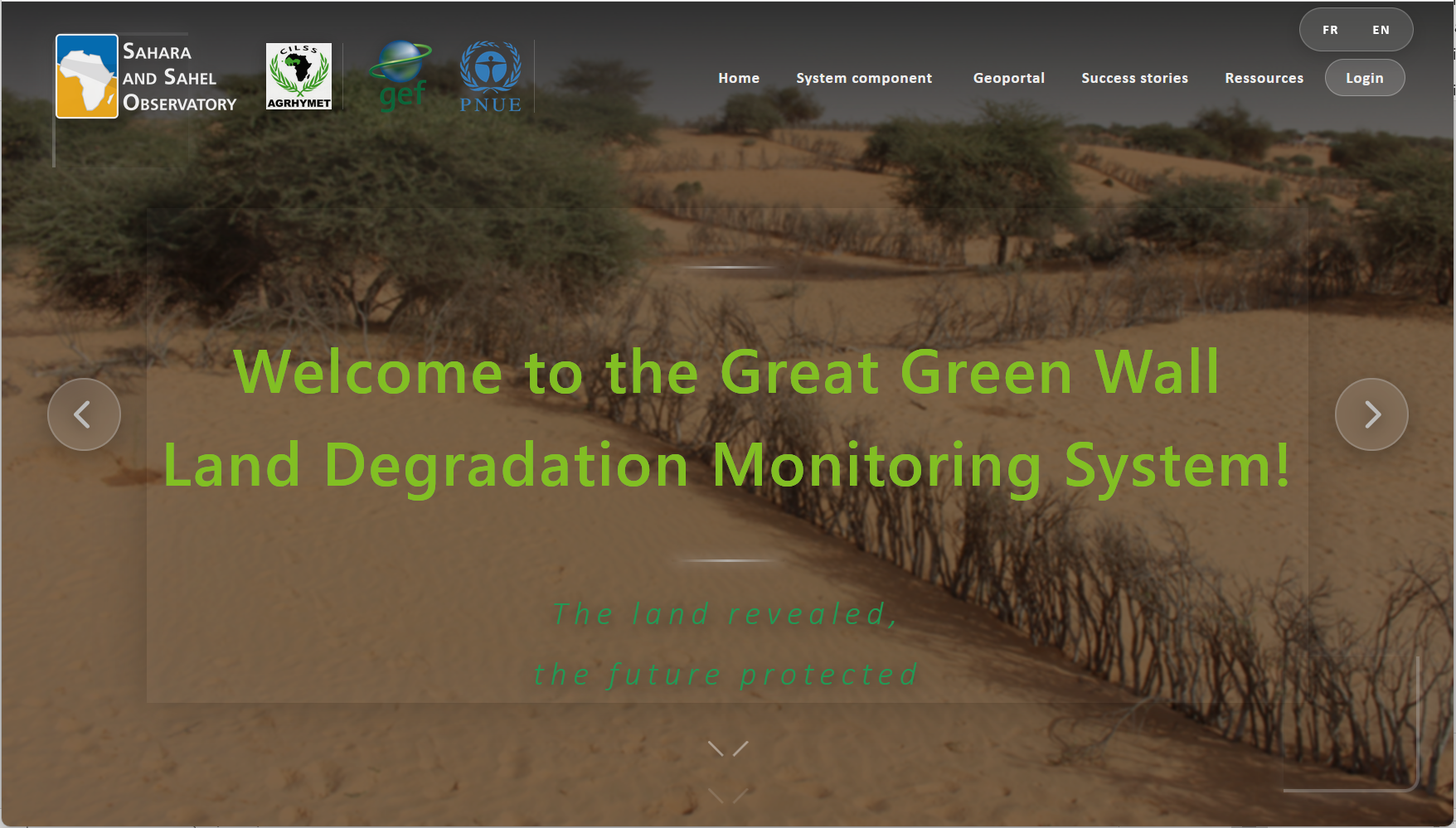
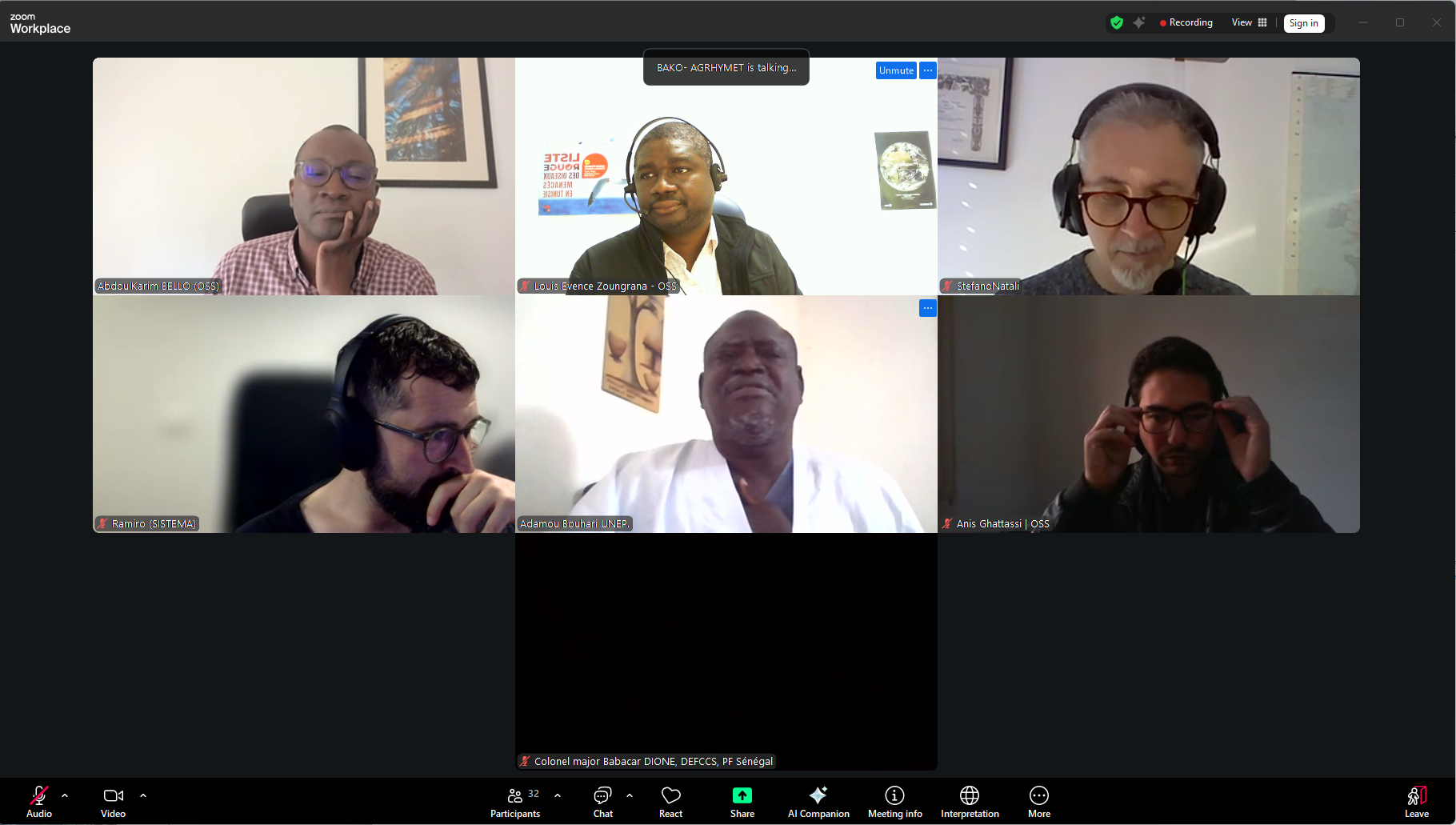
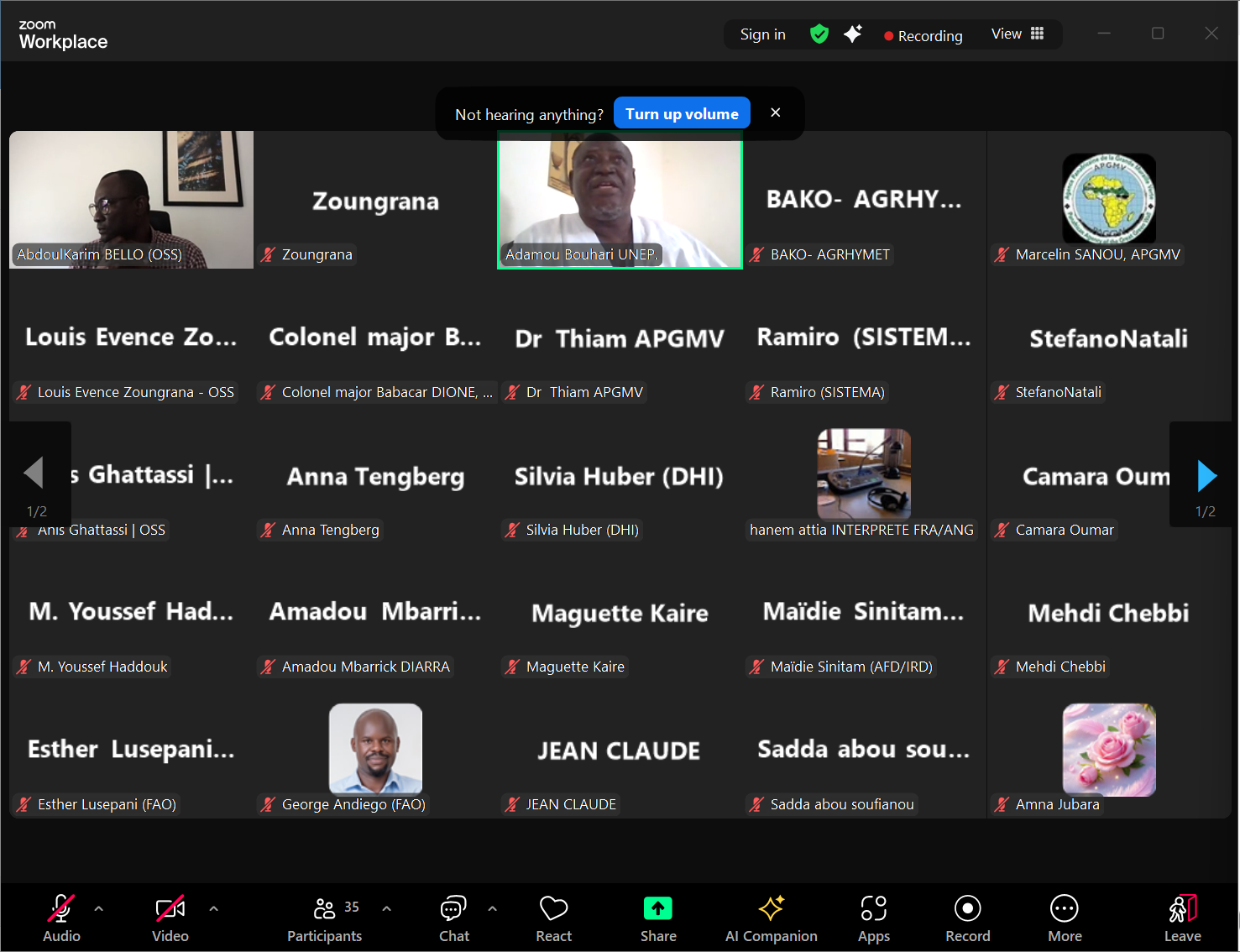
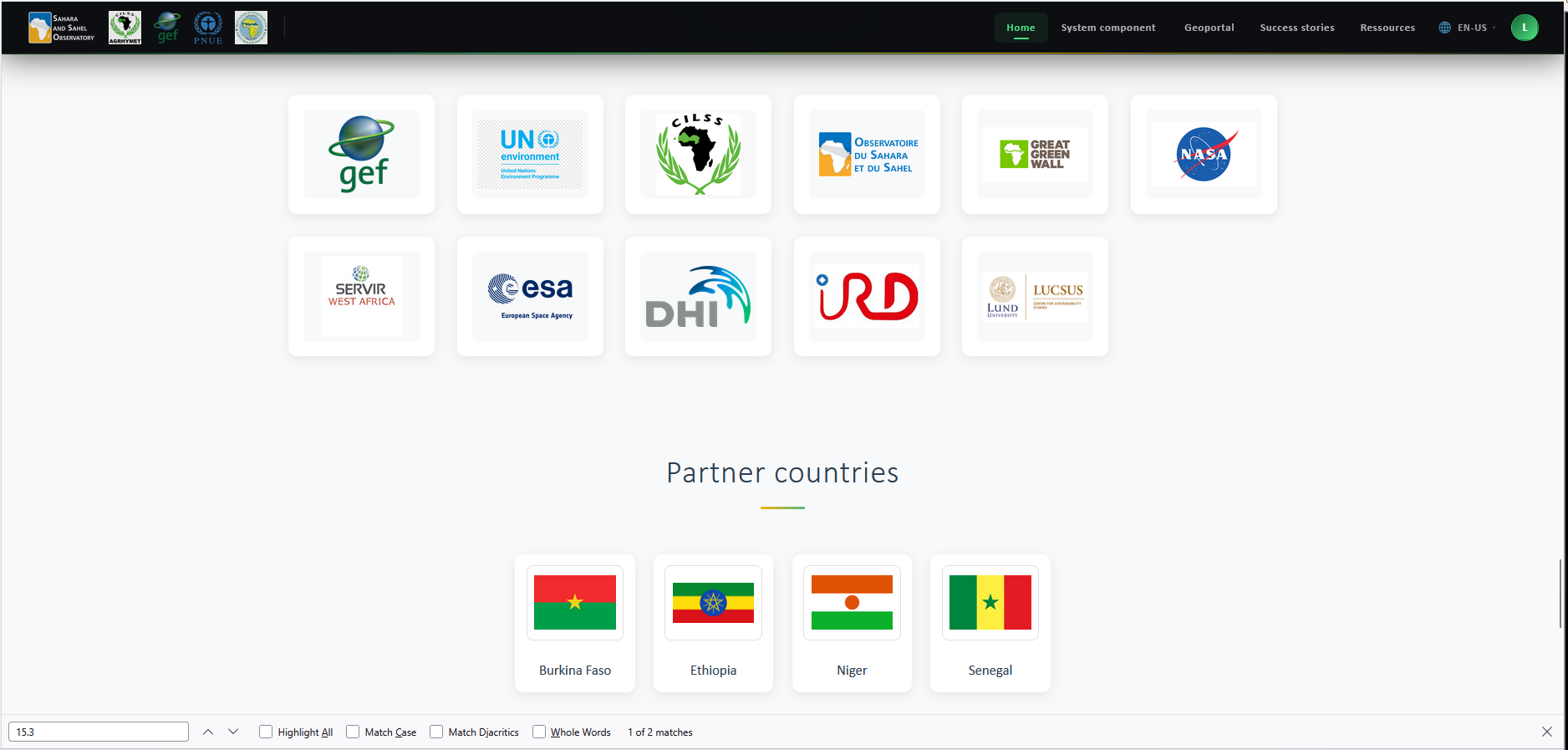
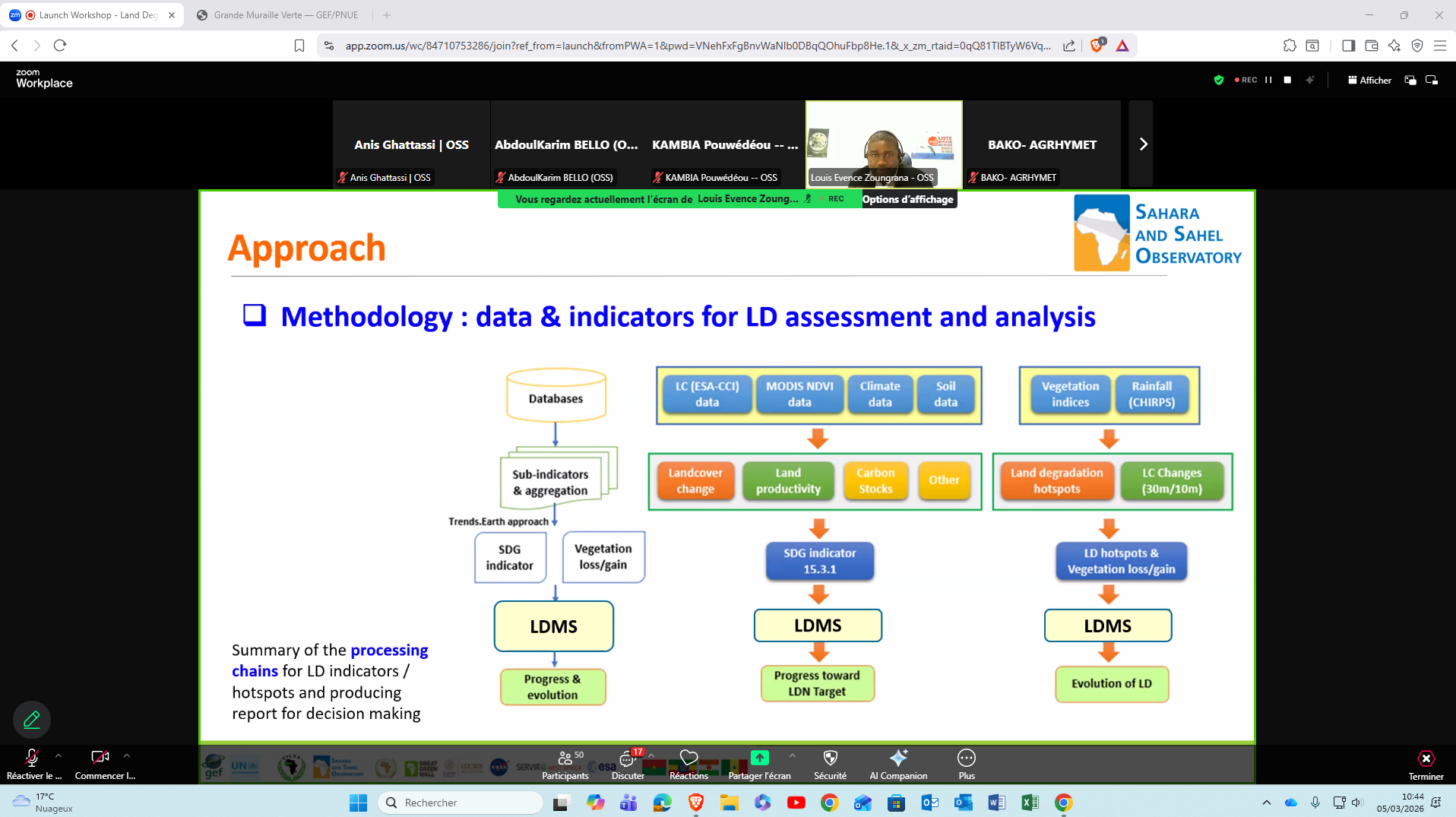
The OSS held the launch workshop of the Land Degradation Monitoring System (LDMS) dedicated to the participatory monitoring of land degradation (LD) and sustainable land management (SLM) processes in the Great Green Wall Initiative (GGWI) region. The platform was developed by the OSS within the framework of the “Large-scale assessment of land degradation to guide future investments in sustainable land management in the Great Green Wall region”project, funded by UNEP and GEF, and involving CILSS/AGRHYMET, ESA, LUCSUS, SISTEMA, DHI, NASA, IRD, the GGWI.
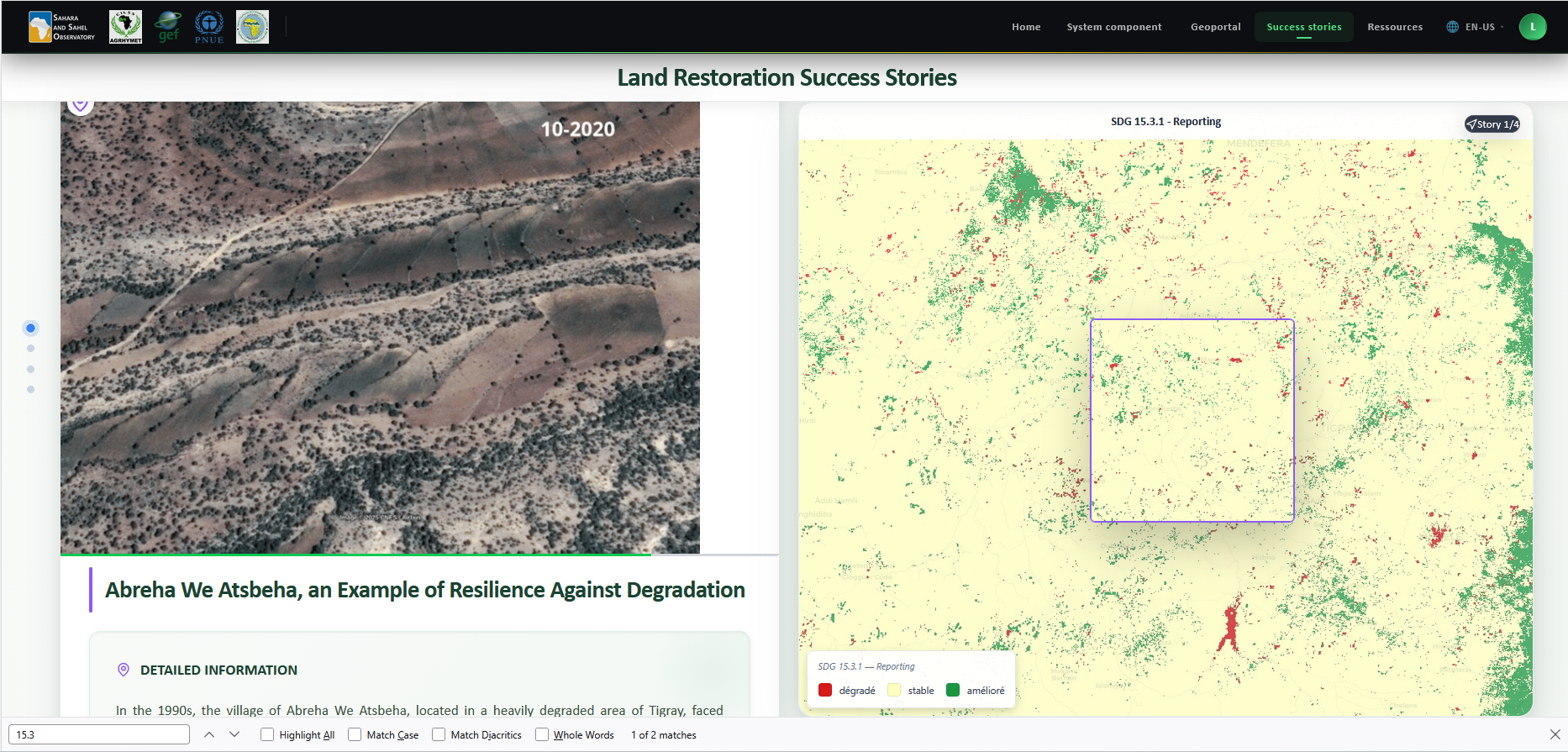
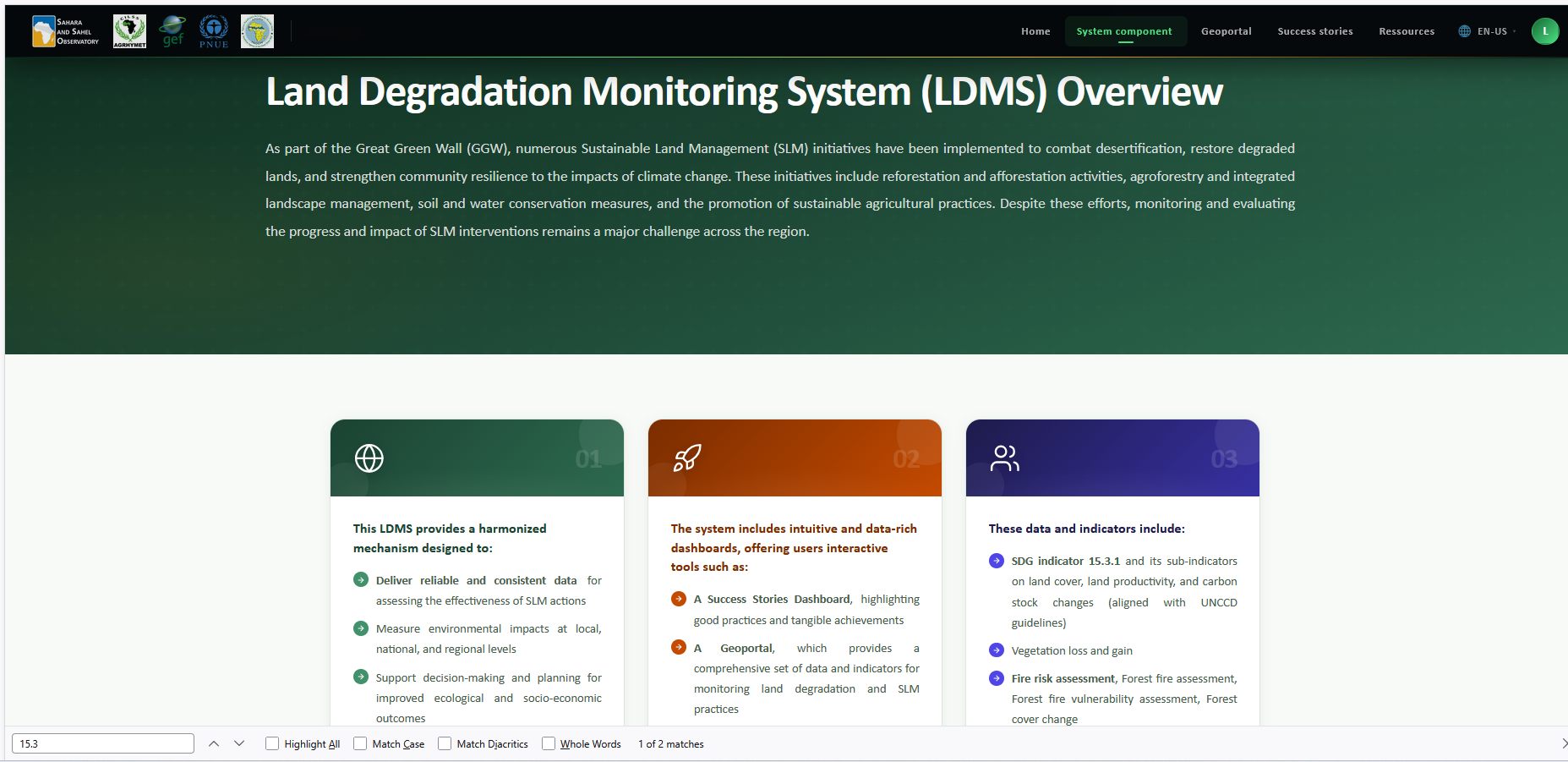
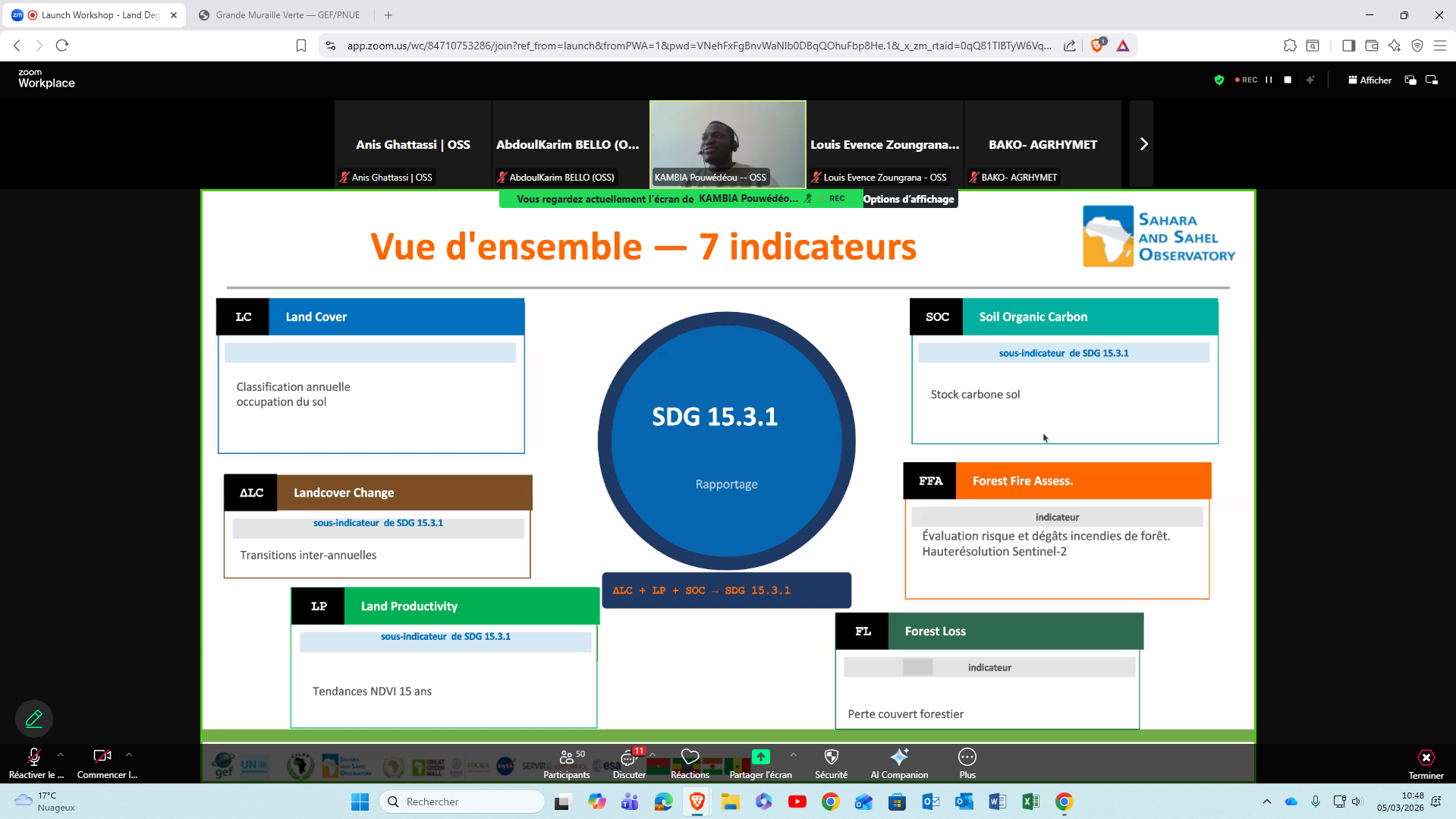
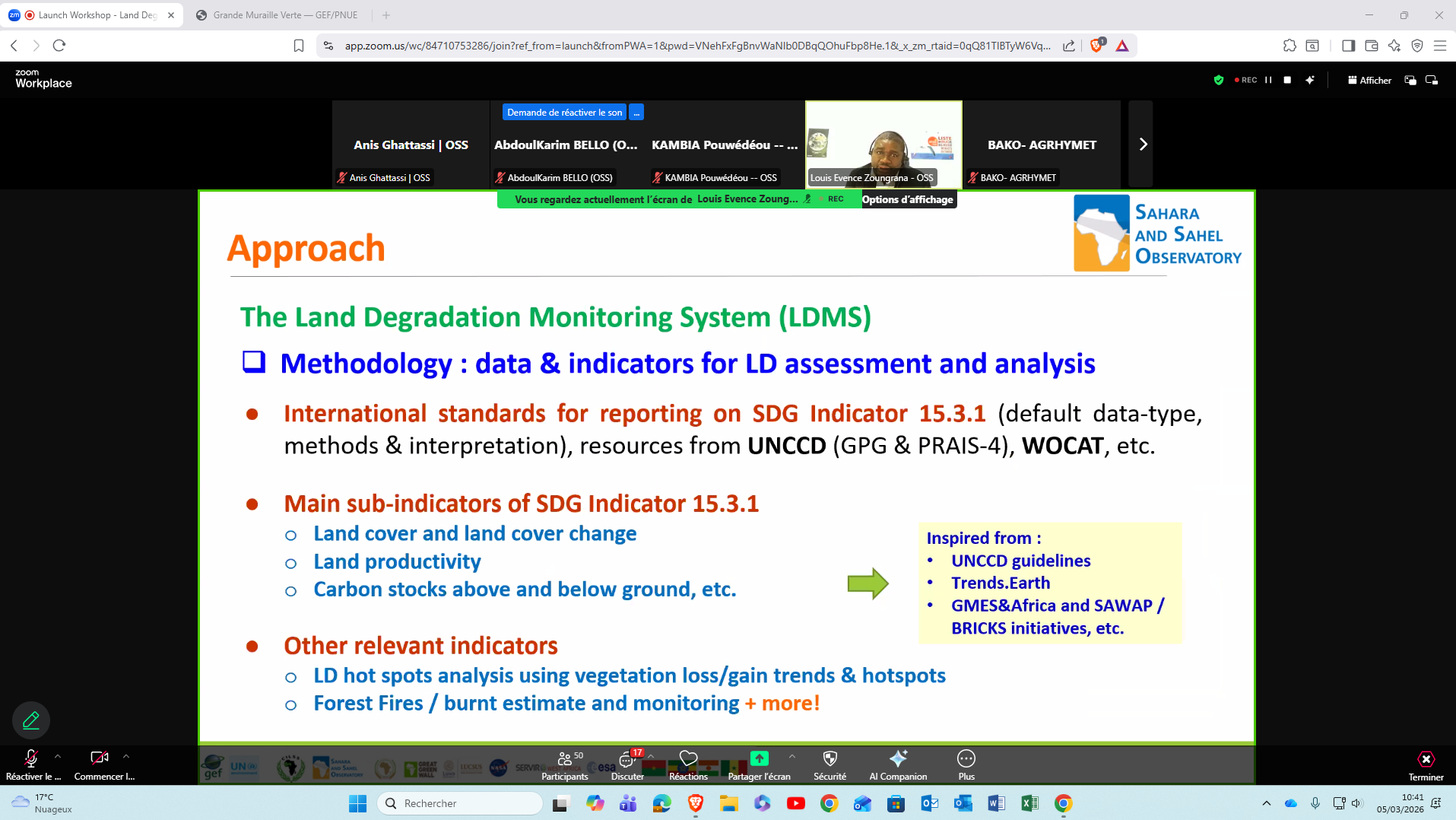
The meeting provided an opportunity to present the architecture of the LDMS and its main components, including the Geoportal and the Success Stories dashboard, while highlighting their operational applications in monitoring land degradation and sustainable land management. The indicators used to monitor land degradation, particularly SDG indicator 15.3.1, were presented and explained, emphasizing their alignment with the UNCCD international standards. In addition, a wide range of Earth Observation data was mobilized in the development of these indicators, including data from the Landsat, Copernicus, MODIS, and Proba-V programs.
A live demonstration session was also organized to explore the full range of LDMS functionalities. Discussions mainly focused on the integration and valorization of national data and indicators provided by the project partners and national institutions. They also addressed the potential use of the system as a tool to support planning, monitoring, and reporting at both national and regional levels.
Following these exchanges, the OSS called on partners and stakeholders to contribute to enriching the platform with national and regional data, as well as with feedback and success stories related to sustainable land management in the GGWI countries. The OSS also committed to supporting the operationalization of the LDMS and strengthening partners’ capacities to ensure effective use and rapid ownership of the system.
Held on January 28, 2025 in Tunis, the 27th session of the Strategic Orientation…
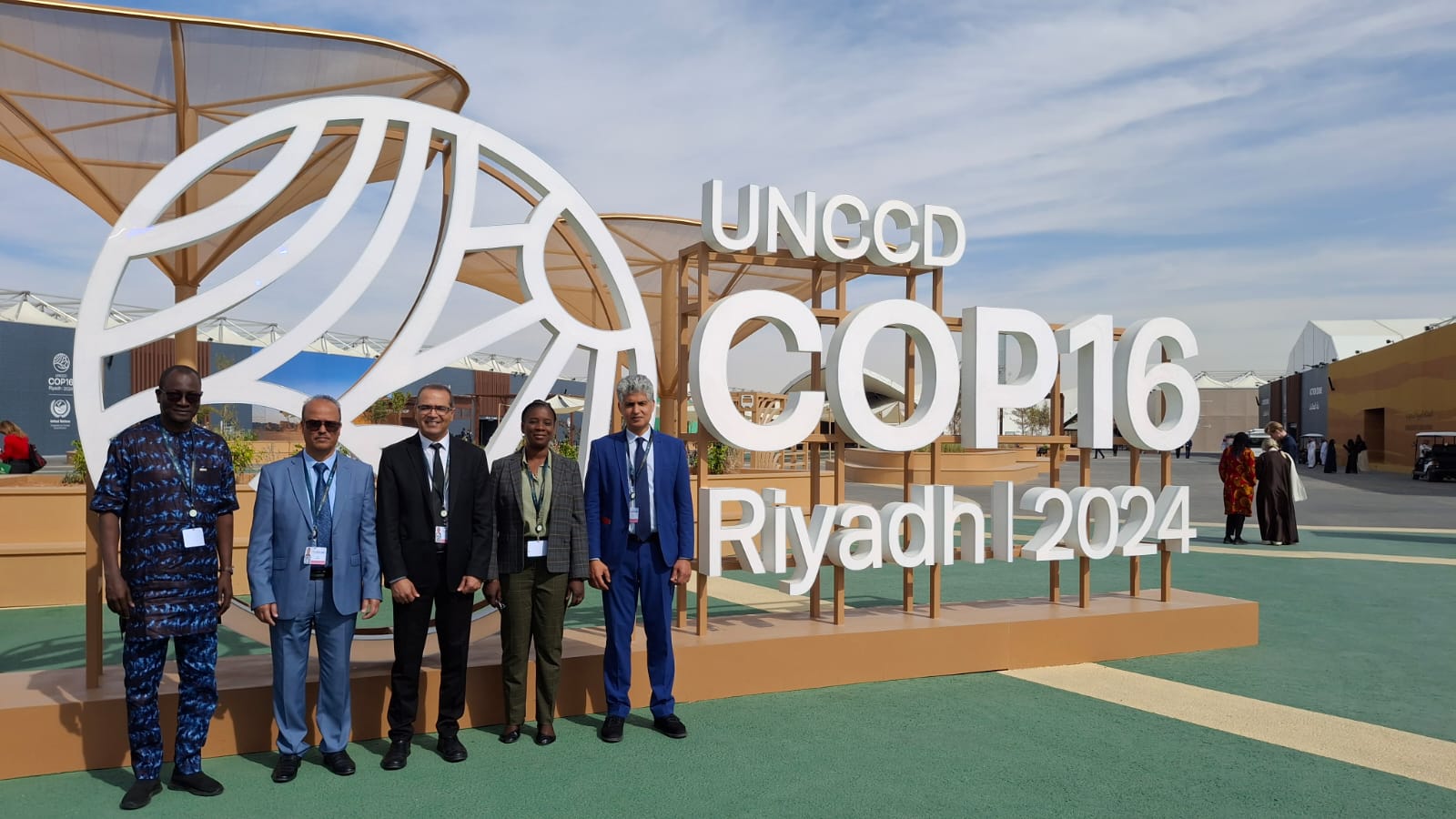
The participation of the Sahara and Sahel…
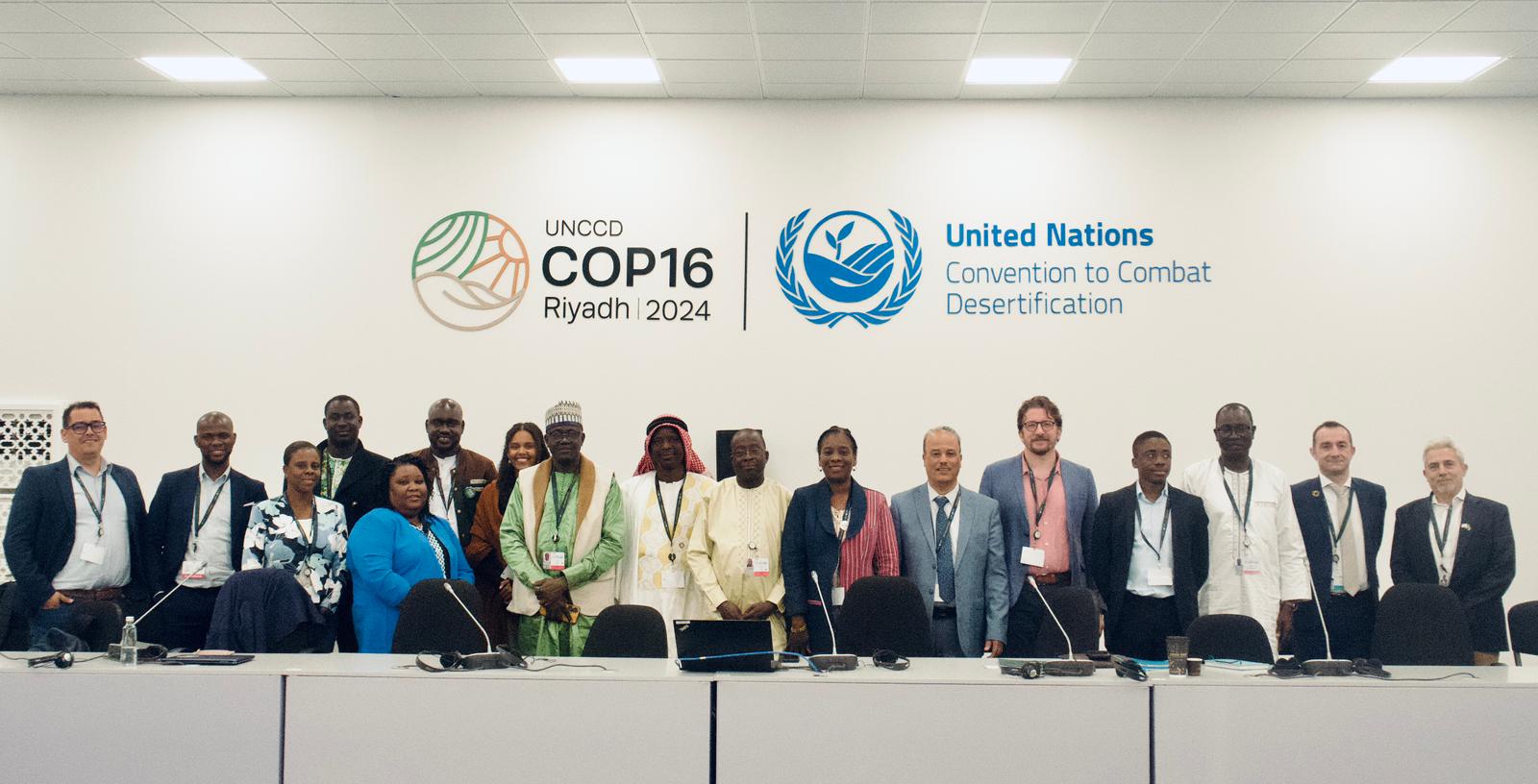
OSS Side Event at COP16: Strengthening Resilience in the Sahel through Multi-…